

This week at Cog #44
AI and memory, communal living, empty nesting, kidney donation and the uneasy voyeurism of the Lindsay Clancy trial

I wanted to send this op-ed in The New York Times this week, by Cody Delistraty, to everyone I know: In anticipation of the Perseid meteor shower, Delistraty writes, “Without awe, we become stuck.” We languish, leaning into self-importance and anxiety and feeling less motivated to help ourselves or others. “Awe exists anywhere you’re willing to look,” insists Delistraty. “And that is the key: You must look.”
I have been awemaxxing this summer, and last weekend I took my kids to Portland, Maine, for Guster’s On the Ocean music festival. I haven’t followed the band as closely as their many fans over many years, but after Cog talked to Adam Gardner this spring, I bought tickets for my family and booked a hotel. I came away from the weekend thinking about two things: the banana pudding ice cream and waffle cones I had for lunch three days in a row, and what an absolute delight it is that these guys have not only figured out how to do something they love for so long, but also how they’ve brought along with them this community of people who, while growing into middle age alongside the band members, and holding down jobs and raising families, continue to gather. I thought the opportunity for awe would be thanks to the tunes and coastal location, but it was more to do with all those people making space in their busy lives and prioritizing joy, together. — SS
This Week’s Stories
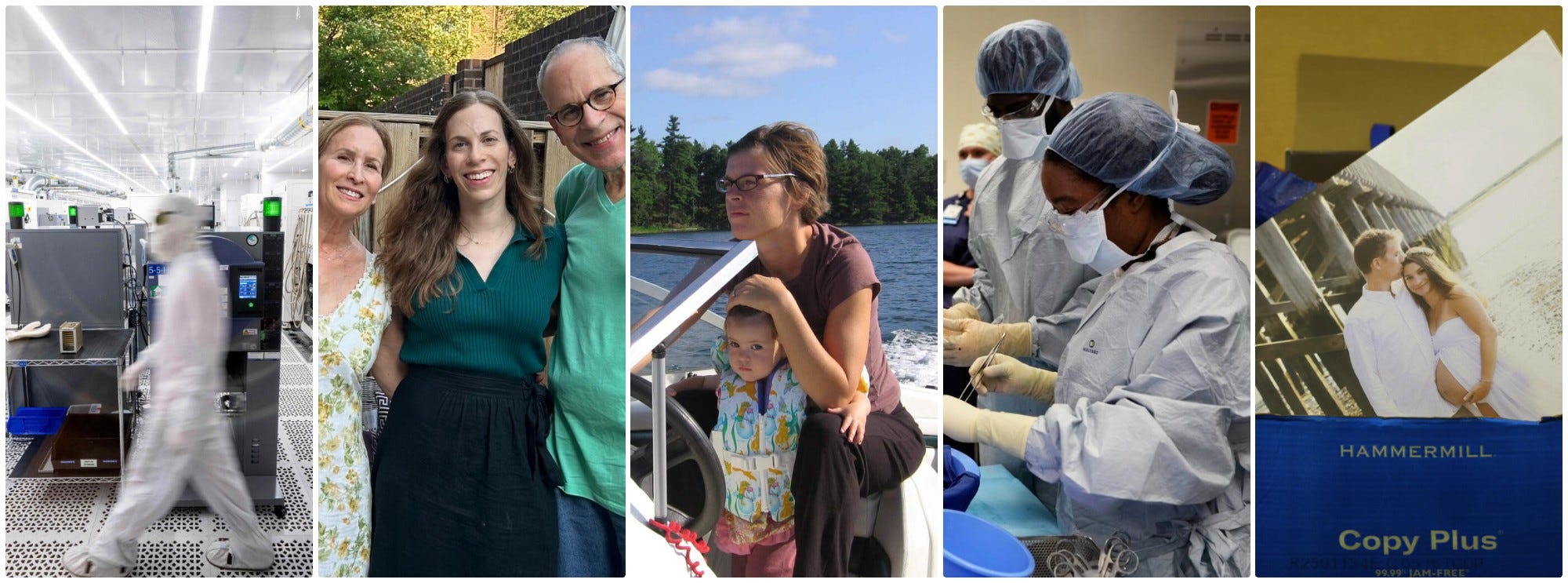
AI helps me remember what my brain forgets
As a high school teacher, Mike Kalin sympathizes with concerns about AI. But a series of medical episodes left the 43-year-old with memory loss. “I have trouble recollecting names, dates, places, events, schedules and other information that can adversely affect my personal and professional relationships,” he writes. “A host of AI tools help me compensate for these deficits.”
It took living with my parents in adulthood to understand how great communal living really is
“When I get into conversations about communal living — especially in this era, when the number of Americans living alone has risen to almost 30% — people often say what I spent years feeling: They want close and regular connection, but they don’t know how to achieve it,” writes Samantha Paige Rosen.
Read and listen: In the empty nest articles I read last summer, there was a lot of advice about relationships with other people, writes Meaghan Shields. But I had no idea that becoming an empty nester would improve my relationship with myself.
At 67, I donated a kidney. No one was more surprised than me
“At age 67, I didn’t suddenly wake up in the morning and say, ‘I want to donate a kidney,’” writes Rich Barlow. Yet his decision to offer his organ took only a week or so. “Concern for a friend motivated me, of course. So did my Catholicism, starting with the Golden Rule.”
The Lindsay Clancy trail is not for us
“The unbearable devastation of someone most of us have never known and will never meet is not for our eyes, nor is what will happen next,” writes Elissa Ely.
Bonus content
’You Could Make This Beautiful’: A Q&A with Maggie Smith and Faith Salie
Poet Maggie Smith and journalist Faith Salie have a new three-episode podcast series, “You Could Make This Beautiful,” produced by WBUR. In an interview featured in our Sunday newsletter, with Cog editor Cloe Axelson, Smith said: “The biggest joy of this project is how surprising these conversations have been. I had no idea what Mike Birbiglia or Henry Winkler would say about poetry.”
I built you a tower a tiny desk
Revisit Sara Schreur’s Cog essay about her enduring love for Death Cab for Cutie then watch their return to NPR’s Tiny Desk.